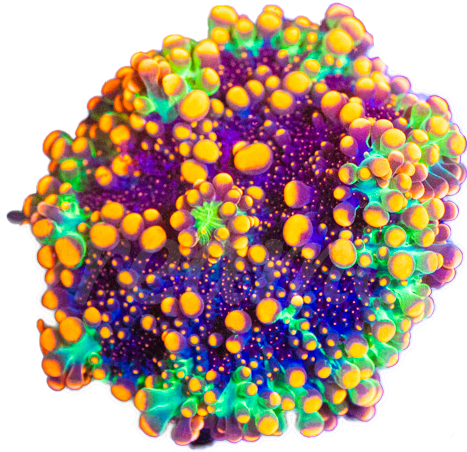
Corals might often be mistaken for inert rocks or plants, but in truth, they are vibrant living organisms that are crucial to marine ecosystems. Dive into their world, and one discovers a realm teeming with color, life, and purpose. Let’s understand the rudimentary anatomy of these marine marvels.
The Basic Anatomy of Corals
At the heart of every coral is its fundamental unit: the polyp. These are tiny, soft creatures resembling miniature anemones. Each polyp sits inside a protective calcium carbonate shell, giving corals their rigid structure. Within the polyp is a singular stomach that opens out as a mouth, encircled by a ring of tentacles. These tentacles are essential for feeding, as they capture small marine prey.

When you see vast coral formations, you’re actually observing numerous polyps living as a community. These colonies expand over years, laying the foundation for expansive reefs. The diverse colors in corals come not from the polyps, but from a symbiotic algae named zooxanthellae residing in their tissues. This algae grants corals their array of hues, from deep blues to vibrant reds.
Another intriguing part of corals is their skeletal system. It might look stony outside, but hidden within is the calicle, a skeletal structure under the polyp. This grows over time, forming the familiar solid coral structures. In essence, corals are not mere structures. They are bustling, living communities pivotal to our oceans. Understanding them deepens our appreciation for the delicate balance of marine life.
The Role of Corals in Marine Ecosystems
Diving beneath the waves, one cannot help but be captivated by the sprawling coral reefs. These vast underwater cities aren’t just beautiful; they serve a paramount role in marine ecosystems. Corals offer a sanctuary for many marine species. Their intricate structures provide hiding spots and breeding grounds for countless fishes, crustaceans, and mollusks.

But that’s not all. Corals also play a part in nutrient cycling. Their relationship with zooxanthellae algae facilitates a process where the algae take in the waste produced by the corals and, in return, produce oxygen and other nutrients. This symbiotic relationship not only keeps our oceans rich but also ensures the health and growth of the coral itself. Furthermore, coral reefs act as barriers, reducing the impact of strong waves and preventing coastal erosion. This shields coastal habitats and even human populations from potential harm. By serving as a buffer, corals ensure that marine habitats remain diverse and teeming with life. In essence, these reefs are the lifeline of our oceans, sustaining life and maintaining ecological balance.
Soft Corals vs. Hard Corals: Basic Differences
While corals are universally recognized for their beauty and ecological importance, it’s vital to understand that they’re not a monolithic entity. One of the primary distinctions lies between soft and hard corals. At first glance, hard corals might seem like the skeletal remains of a once-living organism, but they’re very much alive. They form the primary structure of coral reefs. Species like brain, staghorn, and elkhorn corals fall into this category. Their rigidity is because of the calcium carbonate skeleton they secrete. This framework not only offers them protection but also forms the backbone of our world’s coral reefs.

On the other hand, soft corals lack this hard, limestone skeleton. As a result, they often appear more flexible and tree-like. Examples include sea fingers and sea fans. Instead of a hard skeleton, their structure is maintained by tiny, spiky skeletal elements called spicules. This gives them a softer appearance, making them sway beautifully with the ocean’s currents.

The distinction between soft and hard corals isn’t just cosmetic. It influences where they grow, how they contribute to the marine ecosystem, and the kind of care they need if cultivated in aquariums. Both are equally vital to marine life, but they play different roles and face unique challenges.
How Corals Reproduce
Understanding the reproduction methods of corals is essential for their conservation. At the heart of this process are the polyps – tiny, soft-bodied organisms that make up corals. These polyps have a variety of methods to ensure the continuation of their species. Sexual reproduction in corals is genuinely a spectacle. Once a year, in a synchronized event, many coral species release a combination of eggs and sperm, called gametes, into the water. This phenomenon, known as broadcast spawning, fills the ocean with potential new life. Once the eggs are fertilized, they drift as larvae and eventually settle to form new coral colonies. Asexual reproduction is another method employed by corals. Here, a part of the parent polyp pinches off to form a new individual. This is known as budding. Fragmentation, where parts of a coral colony break off and settle in a new location, is another form of asexual reproduction. Through these methods, corals can rapidly colonize available spaces. Both methods ensure the resilience and survival of corals in changing marine environments, highlighting the adaptability of these remarkable organisms.
Corals and Symbiotic Relationships
Corals don’t thrive in isolation. Their success is deeply intertwined with a range of symbiotic relationships, most notably with the algae called zooxanthellae. This relationship is mutualistic, meaning both parties benefit. The coral provides the algae with a protected environment and the compounds necessary for photosynthesis. In return, zooxanthellae supply corals with the glucose, amino acids, and other vital nutrients they produce. This partnership is so integral that the vibrant colors we associate with corals are actually a result of these algae.

When corals are stressed due to reasons like rising water temperatures, they expel the zooxanthellae. This process, known as coral bleaching, makes the corals appear white and can be fatal if the stress continues.

But zooxanthellae aren’t the only partners. Corals also associate with certain types of bacteria and fungi that help them absorb nutrients or defend against harmful pathogens. These partnerships showcase the intricate balance and interconnectedness of marine life, reminding us of the delicate nature of ocean ecosystems.
The Different Types of Coral Formations
When we dive beneath the waves, the intricate and stunning coral formations that greet us are an enchanting spectacle. These formations, which have evolved over millions of years, stand as silent witnesses to Earth’s changing climate and the rhythmic ebb and flow of tidal waves. Each formation, unique in its architecture, narrates stories of adaptation, resilience, and a relentless dance with nature. The majestic reef-building corals, colloquially referred to as hermatypic corals, are responsible for crafting the massive coral reefs we admire. These reefs are bustling hubs of marine biodiversity. By generating robust calcium carbonate skeletons, these corals provide a stable foundation that shelters countless marine species. On the opposite spectrum are the soft corals, devoid of those hard skeletons. Their bodies, reinforced by minute spicules, grant them a certain grace and flexibility. They flourish particularly well in waters that are either deep or marked by strong currents. Then there are the mushroom corals, a treat to the observer’s eye. Predominantly situated in sandy environments, their design closely resembles mushrooms. Their expansive, flattened structure is a clever adaptation, ensuring they absorb maximum sunlight, a vital necessity for their symbiotic algae, the zooxanthellae. In a similar vein, the branching corals, with their tree-like aesthetics, stretch out their branches, not for beauty, but to harness the sun’s energy, instrumental for their very existence.

Threats to Coral Reefs Worldwide
The world beneath the waves, as awe-inspiring as it is, faces a myriad of threats that could forever alter its delicate balance. Climate change, an ever-persistent specter, is radically shifting ocean temperatures, triggering widespread coral bleaching. These recurrent bleaching events sap the strength and vitality of corals, pushing them towards a premature demise. Furthermore, direct human interventions, including rampant overfishing, tilt the scales, jeopardizing the natural balance of coral ecosystems. Each fish species, irrespective of its size or grandeur, performs a pivotal function. Some keep the menacing algae growth in check, while others play guardian to the vulnerable coral polyps. When these fishes disappear, it initiates a chain reaction, the consequences of which can be catastrophic for the reefs. Unsustainable land practices, such as large-scale deforestation and unchecked urban development, discharge sediments into the oceans, potentially choking and smothering the corals. Moreover, a slew of pollutants continually pollute these waters, introducing elements that are toxic to these fragile ecosystems.
Dreamcorals: Bridging Oceans to Homes
Yet, in this gloomy scenario, rays of hope shine through. The surge in conservation activities and the rising tide of awareness are making a difference. Companies like Dreamcorals stand at the forefront of this positive change. Offering more than just exquisite corals, Dreamcorals endeavors to bridge the gap between the oceans and our homes, enlightening aficionados and kindling a deep-seated admiration for marine wonders. Their dedication to corals transcends commercial interests. It echoes a resonant call to cherish and safeguard the undersea treasures. At Dreamcorals, one doesn’t just browse through offerings; one embarks on a journey into the aquatic realm, fostering a shared dream of ensuring a radiant tomorrow for the corals and the diverse life they nurture.